In recent years, the vast amount of big data generated across various industries has created new opportunities for artificial intelligence (AI), an emerging technology, to reshape research paradigms in multiple disciplines. The integration of AI with theoretical, computational, and experimental aerodynamics has opened up new frontiers in aerodynamic research. Recent studies have demonstrated significant advancements in using AI for simulating, modeling, optimizing, and controlling complex flows. However, the development of intelligent aerodynamics remains in its early stages, with most current research focused on simple geometries and flow conditions, which are still far from real-world engineering applications.
Moreover, challenges persist in theoretical research, particularly regarding the generalization and interpretability of AI models. Further exploration is needed to achieve a deeper integration of AI with traditional research paradigms. This special topic aims to explore innovative AI-driven methodologies for tackling complex fluid dynamics problems. Key areas of discussion include:
Feature extraction and knowledge discovery of flows
Aerodynamic modelling based on artificial intelligence
Data fusion and data assimilation of multi-source aerodynamic data
Numerical methods of complex flows and multiphysics problems based on artificial intelligence
Aerodynamic shape optimization based on artificial intelligence
Flow control based on artificial intelligence
Agent-based applications in fluid mechanics
We welcome contributions from research teams related to intelligent aerodynamics.
Please submit your manuscript via Online Submission System: https://easychair.org/conferences/?conf=meae2026
Please choose "Special Session 1"
 |
Jiaqing Kou, Northwestern Polytechnical University, China
Jiaqing Kou is currently a National Young Talented Professor (Overseas) in School of Aeronautics, Northwestern Polytechnical University (NPU). His research focuses on intelligent aerodynamics, computational fluid dynamics, and aircraft design. He has published over sixty papers in leading journals, including PAS, JFM, JCP, and AIAA J, etc, with over 3,500 citations on Google Scholar. He has been continuously listed as yearly "Top 2% Leading Scientists in the World" for six consecutive years. He was a Marie-Curie Fellow and a Humboldt Postdoctoral Fellow. He is Fellow of the Royal Aeronautical Society (FRAeS) and an Associate Editor of Aerospace Science and Technology. |
 |
Shunxiang Cao, Tsinghua University, China
Shunxiang Cao is an Assistant Professor and Ph.D. Supervisor at the Institute for Ocean Engineering, Tsinghua SIGS, and a Shenzhen High-level Talent. His research focuses on reduced-order modeling and intelligent control of fluid–structure interaction. He has published over 30 SCI-indexed papers, including more than 20 as first or corresponding author, and has led or participated in five national and provincial/ministerial research projects.
|
 |
Jing Wang, Shanghai Jiaotong University, China
Jing Wang is an Associate Research Professor at the School of Aeronautics and Astronautics, Shanghai Jiao Tong University. She received her Ph.D. from Zhejiang University and previously worked as a postdoctoral researcher at COMAC Shanghai Aircraft Design and Research Institute. Her research lies at the intersection of AI for Science and AI for Engineering, with a focus on artificial intelligence-enabled fluid mechanics, aerodynamics, and aircraft design. She has led seven competitive research projects, including grants from the National Natural Science Foundation of China, Shanghai municipal programs, and Shanghai Jiao Tong University’s AI for Science initiatives. She has published over 30 SCI-indexed papers and contributed to influential studies in top journals and AI conferences. Her research has been recognized by leading aviation experts and has received major awards, including the WAIC SAIL Award and the Science and Technology Award of the Chinese Society of Aerodynamics.
|
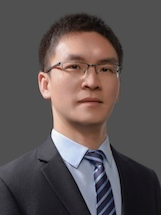 |
Xiaojian Li, Tianjin University, China
Xiaojian Li is an Associate Professor of Tianjin University. He currently serves as a member of the Intelligent Fluid Mechanics Special Committee of the Chinese Aerodynamics Society. His main research interest lies in intelligent aerodynamics of engines. He has published more than 40 papers in the fields of fluid mechanics, aerospace engineering. He was awarded the First Prize of Tianjin Science and Technology Progress Award (2023) and the Second Prize of Shaanxi Science and Technology Progress Award (2025).
|
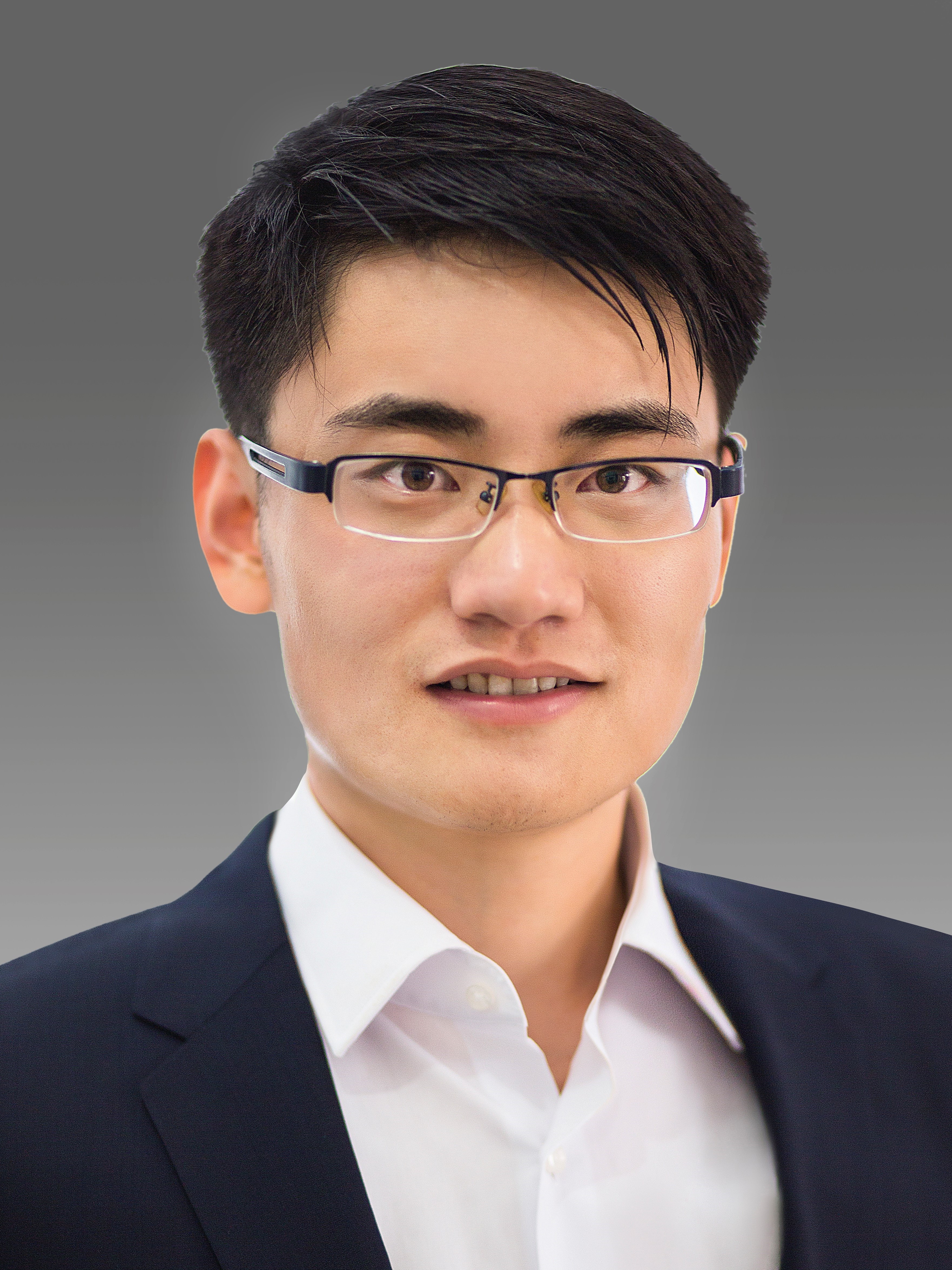 |
Hao Ma, Zhengzhou University of Aeronautics, China Hao Ma received his Bachelor’s degree from Dalian University of Technology in 2015, his Master’s degree from National University of Defense Technology in 2017, and his Ph.D. from the Technical University of Munich in 2022. From 2022 to 2024, he worked as a Machine Learning Researcher at Huawei Technologies. In 2024, he joined the School of Aeronautics and Astronautics at Zhengzhou University of Aeronautics. His research focuses on the intersection of artificial intelligence and aerospace engineering, addressing critical challenges in national major projects such as rocket engine simulation. He specializes in deep learning methods that integrate prior knowledge and multi-agent collaborative CAE software. He has published over ten academic papers and holds five authorized/applied national invention patents. He has led or participated in multiple projects, including those funded by the German Research Foundation (GEPRIS). His work has gained broad recognition in the field, and he serves as a reviewer for internationally renowned journals such as Aerospace Science and Technology and International Journal of Heat and Mass Transfer. |
© MEAE 2018-2026. All Rights Reserved | Contact Us meae_conf@163.com